We'll be running a booth for SAGANet.org at the California Academy of Sciences on Friday, the 17th. Come find our booth and we can chat about astrobiology, space exploration, and more. We'll also have stickers and comic books to give out, scifi books and our book of astrobiology classic literature for sale, and I'll also have some of my meteorites there to show off (including a little piece of the Moon!). Hoping to see you there!
I am an astrobiologist, sci-fi geek, and professor of everything groovy. I write about science, culture, math, history, space, and science fiction. Perhaps like you, I'm seeking a greater understanding of the nature of life and asking myself why all of this really matters. Come with me, and we'll ask some questions together.
Showing posts with label space. Show all posts
Tuesday, May 14, 2019
MAX 2019: A Space Festival
We'll be running a booth for SAGANet.org at the California Academy of Sciences on Friday, the 17th. Come find our booth and we can chat about astrobiology, space exploration, and more. We'll also have stickers and comic books to give out, scifi books and our book of astrobiology classic literature for sale, and I'll also have some of my meteorites there to show off (including a little piece of the Moon!). Hoping to see you there!
Friday, January 25, 2019
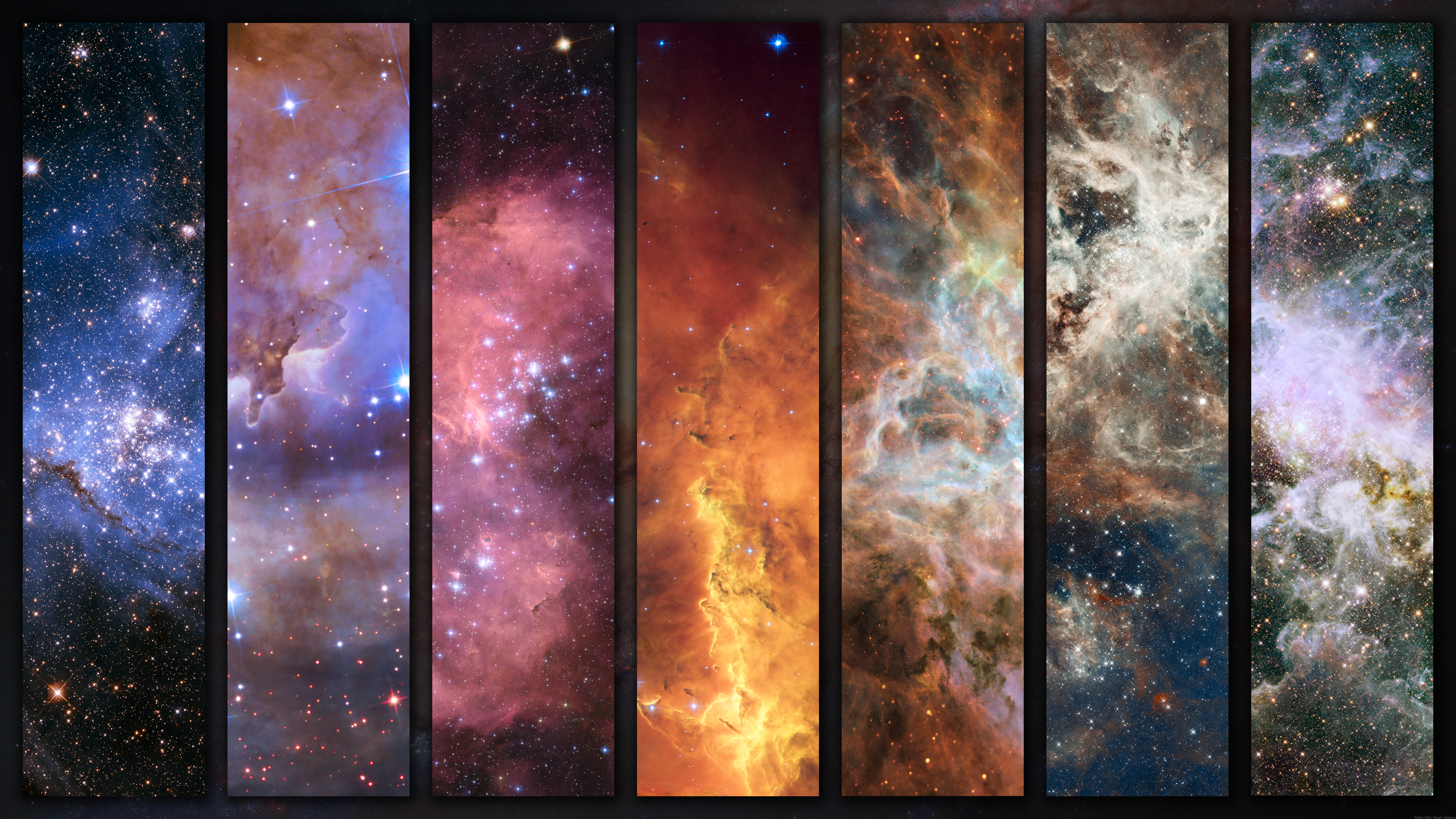
8k Wallpaper of Images from HST and ESO
Dr. Stuart Robbins created this wallpaper graphic from images from the public archives of the Hubble Space Telescope (HST) and the European Southern Observatory (ESO). Pretty darned incredible! I think I'll be using it for a while on my own desktop. You can find an 8k version on his website.
Wednesday, April 18, 2018
Looking Back Upon Me
I looked into the eye of the divine,
Driven.
That flaming jewel in the depths of the cosmos,
Set amid a blanket of starry darkness,
Vast and beautiful.
I looked out to see where I fit,
And found the universe looking back upon me.
Wednesday, June 28, 2017
Get Deep With the Hubble eXtreme Deep Field
![]() |
| The Hubble eXtreme Deep Field Image (NASA; ESA; G. Illingworth, D. Magee, and P. Oesch, University of California, Santa Cruz; R. Bouwens, Leiden University; & HUDF09 Team) |
The Hubble Space Telescope has had a remarkable impact on space science and humanity. From observations of the outer planets of our solar system to exploring other stars and nebulae in our galaxy, Hubble has been an impressive mission and has produced some of the most incredible images of the cosmos to date. One series of incredible images are the Hubble Deep Field (HDF), the Hubble Ultra-Deep Field (HUDF), and the Hubble eXtreme Deep Field (HXDF).
The picture above shows the HXDF in all of its glory. Released in 2012, this picture shows a smattering of galaxies, something in the range of 5,500 of them, and some of them are as far away as 13.2 billion lightyears (meaning that some of those blobs of colored light in this image sent their shine our way some 13.2 billion years ago!).
Just looking at this image should make one wonder about the immense vastness of our universe and the potential things that may be happening in any of those thousands of galaxies far, far away. Now that have evidence to show that many stars in our galaxy have planets, it makes me wonder about how many worlds are out there in just this one region of space from the HXDF alone. Could there be other inhabited worlds? Are there species of beings out there who are turning their own instruments our way and seeing our light from long ago flashing at them? I'd like to think so.
Thursday, June 22, 2017
The Earth and our Moon from Voyager 1
"There is a tide in the affairs of men,
Which taken at the flood, leads on to fortune.
Omitted, all the voyage of their life is bound in shallows and in miseries.
On such a full sea are we now afloat.
And we must take the current when it serves, or lose our ventures."
-William Shakespeare
Voyager 1 is the most distant piece of human engineering and human exploration. It's fanciful to sit and think sometimes about how far away it really is now. As of the exact time of this writing, Voyager 1 is 20,661,735,297 km from the Earth and still going. The Voyagers and their mission were a hallmark of early space exploration. Now is truly the time for us to work together to take this current of humanity's evolution as a spacefaring species, and find our ventures among the other realms in the cosmic ocean.
(Note: in the picture above, the Moon appears very close to the Earth. However, the Moon is really about as far away from us as 30 times the diameter of the Earth! The picture certainly wasn't taken from equal distances to both Earth and Moon)
Wednesday, February 22, 2017
Holy Planets, Batman
![]() |
| The Google Doodle celebrating the TRAPPIST-1 system announcement on 22 February 2017 |
![]() |
| Credit: JPL/NASA |
Wednesday, December 7, 2016
Leland Melvin's Space Love Story
Leland Melvin is a NASA astronaut and one of those people who loves to give back through education and outreach just as much as living on the edge of exploration and research. In this episode of Space Love Story from The Planetary Society, Melvin shares his "ah ha" moment from when he was in space:
Monday, November 28, 2016
The Drunk History of the Discovery of the Cosmic Microwave Background Radiation
![]() |
| Justin Long and Jason Ritter as Arno Penzias and Robert Wilson in the Drunk History episode "New Jersey" |
Drunk History is an absolutely hilarious show. Each episode features three pieces of historical account, all related by some theme or location, and all acted out by a mix of fantastic actors and comedians. The best part: the historical accounts are delivered by people who are ridiculously drunk, and the actors who portray historical figures all lip sync with the spoken words of the drunk story tellers. It's an incredibly fun way to learn about history!
One of my favorite pieces so far from Drunk History was when Jenny Slate tells the story of the discovery of the Cosmic Microwave Background Radiation by Arno Penzias and Robert Wilson in 1964. The parts of Penzias and Wilson are played by Justin Long and Jason Ritter, respectively. This discovery, which showed that there is a remnant thermal radiation throughout the universe which derived from a time not too long after the Big Bang, when protons and electrons where combining to form atoms of hydrogen. This radiation, now often referred to as Cosmic Microwave Background, or CMB, was an important piece to our understanding of modern cosmology and the history of the known universe.
Definitely check out the Drunk History piece on this discovery. It's called A Sound in Space:
Not only is it informative (though not totally correct), but Jenny Slate is absolutely awesome in this episode.
Tuesday, November 22, 2016
A "Space Love Story" with Nichelle Nichols
Nichelle Nichols, the famed actress and singer who played the first incarnation of Uhura in Star Trek (and also, famously, was one of the first people to play a black female character who was not a servant or slave on American television), has been a longtime supporter of space science and space exploration.
In the video below, as part of the Planetary Society's series "Space Love Stories", Nichols talks about when she fell in love with space and why she supports the Planetary Society. Check it out:
Friday, August 12, 2016
Hoping for Clear Skies
We're heading out to the west of the state of Colorado today to hike into the woods somewhere nice and dark to go camping. Most importantly, we're hoping to get clear enough skies to see the Perseids Meteor Shower. This year's shower has been touted as possibly being even more stunning than usual. Here's to hoping for clear skies!
Friday, July 15, 2016
Crabby, Crab, Crabby, Crab, Crab.
There's a neutron star in the middle of the Crab Nebula, and that sucker is spinning 30 times every second!
![]() |
| Image Credit: NASA, ESA, J. Hester (ASU), and M. Weisskopf (NASA / MSFC) |
The image of the Crab Nebula above comes from a composite of x-ray and optical light data from the Chandra X-ray Observatory and the Hubble Space Telescope. The video below shows the two different types of image (x-ray in blue, optical in red) in seven different sets of images from November 200 to April 2001. Those images have been looped many times to create a video, where you can see the swirling stellar winds moving through the nebula from the pulsar.
The Crab Nebula is beautiful, but that beauty can find new meaning when we consider the processes that formed the nebula and are affecting it today.
Here's a wider image showing the Crab Nebula in all of its glory. Let this one sink in...
![]() |
| Crab Nebula (NASA) |
Wednesday, July 13, 2016
Juno's first in-orbit picture of Jupiter and Galilean Moons is awesome
Here's the information about the image from NASA (taken from the page where you can download the full-size image):
"This color view from NASA's Juno spacecraft is made from some of the first images taken by JunoCam after the spacecraft entered orbit around Jupiter on July 5th (UTC). The view shows that JunoCam survived its first pass through Jupiter's extreme radiation environment, and is ready to collect images of the giant planet as Juno begins its mission.
The image was taken on July 10, 2016 at 5:30 UTC, when the spacecraft was 2.7 million miles (4.3 million kilometers) from Jupiter on the outbound leg of its initial 53.5-day capture orbit. The image shows atmospheric features on Jupiter, including the Great Red Spot, and three of Jupiter's four largest moons.
JunoCam will continue to image Jupiter during Juno's capture orbits. The first high-resolution images of the planet will be taken on August 27 when the Juno spacecraft makes its next close pass to Jupiter.
NASA's Jet Propulsion Laboratory, Pasadena, Calif., manages the Juno mission for the principal investigator, Scott Bolton, of Southwest Research Institute in San Antonio. The Juno mission is part of the New Frontiers Program managed at NASA's Marshall Space Flight Center in Huntsville, Ala. Lockheed Martin Space Systems, Denver, built the spacecraft. JPL is a division of the California Institute of Technology in Pasadena."
![]() |
| This picture shows the relative size and structure of Juno and offers information about the instruments. You can find more info on the NASA page for Juno. |
Thursday, June 16, 2016
Winners from the 2016 International Earth & Sky Photo Contest
Popping open Astronomy Picture of the Day on my laptop this morning revealed a fantastic image of the night's sky over Reine, Norway, with the yellowed lights of an island village tucked beneath glacially carved landforms while the night's sky above swirls, alight with the green ghostly glowing of the Aurora Borealis:
If, like me, you love to see fantastically beautiful images of the night's sky, then definitely check out this video showing off several of the best photos from this year's contest:
Wednesday, June 8, 2016
This Thing is Older Than Your Mom!
On May 13th of this year, I had the honor and the pleasure of competing in the Famelab USA science communication competition's national final.
Famelab allows early career scientists and communicators of science an opportunity to improve their skills through educational workshops while also competing against one another by giving short (3 minutes or less) speeches using no slides and, at most, one prop. For this year's final event, I gave a speech titled "This Thing is Older Than Your Mom", where I talked about my favorite meteorite from my personal collection and about how old some of the materials in meteorites can be.
Delivering this talk was another step along the way for me to build a career as a communicator of science. I fumbled a bit on the Q&A session of the event, but it was still a lot of fun and a huge learning experience. For the two days leading up to the final event, we were given a masterclass to develop our skills led by the magnificent Malcolm Love.
I'm so happy to have had the opportunity to share some of my knowledge with a wider audience through Famelab. If you're interested, you can see the other talks I've given before at Famelab events by checking out the page they created for me.
Wednesday, May 4, 2016
Solar Stuff, Arcing Away
This is definitely one of the
coolest videos you'll see today!
Here's some recent footage collected in the extreme ultraviolet from NASA's Solar Dynamics Observatory (SDO), which shows a magnetic arc of material on the sun lifting up and then blasting some of the material off into space!
Here's a description of what you're seeing from Steele Hill and Sarah Frazier of NASA's Goddard Space Flight Center:
"An elongated, streaming arch of solar material rose up at the sun’s edge before breaking apart in this animation of imagery captured by NASA’s Solar Dynamics Observatory on April 28, 2016. While some of the solar material fell back into the sun, the disintegration of this magnetic arch also sent some particles streaming into space. These details were captured in a type of light that’s invisible to human eyes, called extreme ultraviolet. The images were colorized in gold for easy viewing."
Tuesday, April 19, 2016
The Immunity Syndrome
I love sci-fi stories that consider what other types of life could exist. A single-celled organism that is larger than North America may seem far fetched, but could it be possible that life at some point could evolve to form organisms so large? Even though this episode treats this organism as a giant cell (Spock even announces that it's composed mostly of protoplasm), maybe there could be organisms that are gigantic, contiguous structures as large or even larger than planets. Perhaps they have their own biomes composed of multitudes of other organisms inside of them, or perhaps they could be composed of various connected biological organs and tissues. Would such organisms need to eat worlds to live? Would they be able to develop some way to propel themselves through space? I guess we really wouldn't know if this is possible, until we ourselves step out amongst the stars and take a look to see if there are other forms of life out there.
Wednesday, March 30, 2016
Pluto might not behave like a planet, but it's still pretty cool
![]() |
| NASA/JHUAPL/SwRI |
-Neil deGrasse Tyson
It may be true that Pluto is nothing like the Terrestrial or Jovian planets, but it's still an intriguing little world. The New Horizons mission has taught us so much more about Pluto than we ever knew before and has made Pluto an object of extreme interest once again. Even if it's not a planet, Pluto is still pretty awesome!
Friday, March 18, 2016
The Milky Way Over Ural, Russia
Wednesday, February 24, 2016
Voyaging, for Almost Four Decades
We'll soon be closing on 40 years since the launch of Voyagers 1 and 2. These missions have done so much for planetary science and are still alive, continuing to send data back to us about the space environment along their travels. They may last as much as another 5 or 10 years before they run so low on power that all of their instruments shut down.
Even after the Voyagers have shut down their instruments and died, they will still travel; out there amongst the stars, the furthest reach of humanity, they will continue on.
Tuesday, February 23, 2016
Jupiter, King of Worlds
![]() |
| Jupiter is a behemoth of planetary mass in our solar system. Here you can see the relative masses of the 8 planets. (image from Das steinerne Herz on Wikipedia) |
It was Galileo's discovery of four of the moons of Jupiter in 1610 and his writing of them that nearly caused the Catholic Church to murder Galileo (the idea that there could be moons orbiting other planets was certainly considered blasphemy against the church at that time). Below you can see a page from the Sidereus Nuncius ("Starry Messenger"; Galileo's 1610 book on his astronomical observations), where Galileo drew Jupiter and the moons he had discovered:
The Pioneer 10 spacecraft was the first extension of humanity to fly by Jupiter back in 1973. Here's one of the images taken during that encounter with the giant world. Pioneer 10 was the first spacecraft to measure the radiation and magnetic fields surrounding Jupiter. It was also the first to take images of the moons of Jupiter up-close. Pioneer 10 passed within 81,000 miles of the cloudtops of Jupiter on it's flyby over 40 years ago.
Jupiter has since had several other spacecraft go zooming by, most of which at least took pictures if not full-on collecting data and targeting Jupiter and its moons for observation; for instance, check out this table I stole from Wikipedia on spacecraft that have flown by along with the dates of closest approach and the minimum distance from Jupiter at that time:
| -----Spacecraft----- | Closest -----Approach------ | -----Distance----- |
|---|---|---|
| Pioneer 10 | December 3, 1973 | 130,000 km |
| Pioneer 11 | December 4, 1974 | 34,000 km |
| Voyager 1 | March 5, 1979 | 349,000 km |
| Voyager 2 | July 9, 1979 | 570,000 km |
| Ulysses | February 8, 1992 | 408,894 km |
| February 4, 2004 | 120,000,000 km | |
| Cassini | December 30, 2000 | 10,000,000 km |
| New Horizons | February 28, 2007 | 2,304,535 km |
The only spacecraft so far to be sent into orbit of Jupiter was the Galileo Spacecraft, which operated in the Jovian system for over 8 years (from its arrival in December of 1995 until we crashed it into Jupiter (something we like to call "de-orbiting") in September of 2003). Galileo was used to study Jupiter's atmosphere and rings and to image and study the volcanoes on Io. Galileo discovered that Ganymede has its own, very strong magnetic field and really gave us most of the best data from which we have concluded that there is likely a deep subsurface ocean on Europa. The Galileo spacecraft really unlocked Jupiter and set the grounds for future spacecraft to visit that giant world.
| An artist's concept of the Galileo spacecraft at Jupiter, with Io's volcanoes erupting nearby |
Following Juno, there are two missions in the works for studying the icy moons of Jupiter. JUICE (the Jupiter Icy Moon Explorer) is an ESA mission slated for launch in 2022. JUICE is designed to study primarily Ganymede and Callisto, though it should also fly by Europa a couple of times as well. A NASA mission set for launch on the early 2020s (likely 2022, as of now) is also in the works. The mission is currently called the Europa Multiple-Flyby Mission, though that name will surely change when the mission is more fully developed. This mission will focus on studying Europa. It will tell us about the surface processes and composition of Europa, will tell us a bit about the internal geology and composition of this moon, and, most importantly for astrobiology, will seek to determine the existence of Europa's ocean and determine what it can about the composition and possible surface-interactions of this ocean.
Though JUICE and the Europa Multiple-Flyby Mission will target the icy moons of Jupiter, they will teach us a lot about the Jovian system in general (like how Jupiter's magnetic field and the chaotic whipping of particles through that field effect the moons of Jupiter). Taken along with Juno, the next couple of decades of research on Jupiter should be highly revealing, telling us a lot about the king of the planets but also helping us to uncover new mysteries and new questions about this behemoth in our solar system.
In closing out this post, here is a quote about Jupiter, the god, from Ovid:
"Jupiter, from on high, smiles at the perjuries of lovers."
When it comes to the "perjuries of lovers" on Earth, Jupiter the planet, just as Jupiter the god, most certainly has no interest in our shortcomings. Though there is a beautiful history to consider in astrology, and Jupiter most certainly has played a prominent role there, the real test of time for Jupiter has revealed this king of our planets to be a massive and active monster of nature, though also beautiful in its presentation of itself to the universe.
![]() |
Jupiter Drawing, from Kelvin Ma at Wikipedia
|
Subscribe to:
Posts (Atom)